Search This Blog

Monday, November 14, 2016

In Response To "John Cleese" And The Revocation Of Independence

SUBJECT: NOTICE OF REVOCATION OF INDEPENDENCE

To the citizens of the United Kingdom of Great Britain and Northern Ireland:

We welcome your concern about our electoral process. It must be exciting for you to see a real Republic in action, even if from a distance. As always we're amused by your quaint belief that you're actually a world power. The sun never sets on the British Empire! Right-o chum!

However, we regretfully have to decline your offer for intervention. On the other hand, it would be amusing to see you try to enforce your new policy (for the 96.3% of you that seem to have forgotten that you have little to no real power). After much deliberation, we have decided to continue our tradition as the longest running democratic republic. It seems that switching to a monarchy is in fact considered a "backwards step" by the majority of the world.

To help you rise from your current anachronistic status, we have compiled a series of helpful suggestions that we hope you adopt:

1. Realize that language is an organic structure, and that you aren't always correct in your pronunciation or spelling. Let's use your "aluminium" example. Sir Humphrey Davy (an Englishman) invented the name "aluminum" (note spelling) for the metal. However, in common usage the name evolved into "aluminium" to match the naming convention of other elements. In 1925 the United States decided to switch back to the original spelling and pronunciation of the word, at which point we dominated the aluminum industry. We'd also like to point out that the process of actually producing aluminum was developed by an American and a Frenchman (not an Englishman).

However, we'd like to thank you for the Oxford English Dictionary. It's an interesting collection, considering that over 10,000 of the words in the original edition were submitted by a crazy American civil-war veteran called Dr. William Charles Minor.

2. Learn to distinguish the American and Canadian accents, and then we'll talk about the English and Australian accent issue.

3. Review your basic arithmetic. (Hint 100 - 98.85 = 1.15 and 100 - 97.85 = 2.15)

4. If you want English actors as good guys, then make your own movies. Don't rely on us for your modern popular culture. We liked "Lock, Stock, and Two Smoking Barrels", "Trainspotting", and "The Full Monty". We've also heard good things about this "Billy Elliot". But one good movie a year doesn't exactly make a cultural powerhouse. However, you're doing pretty well with music, so keep up the good work on that front.

5. It's inefficient to have a national anthem that changes its title whenever your monarch dies. Let's not forget that your national anthem has an extremely boring tune. We suggest switching to that Rule Brittania ditty, it's toetapping. Or maybe Elton John could adapt "Candle In The Wind" again for you guys.

6. Improve at your national sport. Football? Soccer? This just in: United States gets fourth place in men's soccer at the 2000 Summer Olympics. United Kingdom? Not even close. By the way, impressive showing at Euro 2000. You almost managed to get through the tournament without having your fans start an international incident.

7. Learn how to cook. England has some top notch candy. Salt 'n' Vinegar chips are quite yummy. However, there's a reason why the best food in your country is Indian or Chinese. Your contributions to the culinary arts are soggy beans, warm beer, and spotted dick. Perhaps when you finally realize the French aren't the spawn of satan they'll teach you how to cook.

8. You're doing a terrible job at understanding cars. The obvious error is that you drive on the wrong side of the road. A second problem is pricing, it's cheaper to buy a car in Belgium and ship it to England than to buy a car in England. On the other hand, we like Jaguars and Aston Martins. That's why we bought the companies.

9. We'll tell you who killed JFK when you apologize for "Teletubbies".

Thank you for your time. You can now return to watching bad Australian soap operas.

P.S. — Regarding WW2: You're Welcome.

---------

The preceding was written in 2001 as a joke regarding the 2000 election, and copy and pasted from a Snopes article originally published in 2003. The "John Cleese" call to revoke American Independence that it responds to was written a year prior and not in fact written by him.

The Revocation article has been circulating in reference to the 2016 election. And so I provide the response here.

Monday, October 24, 2016

Writing Exercise: The Fruit

"Go ahead, Ted. Do it."

Ted Wilson stood looking down at the basket of fruit at the counter of the Gulp'n Go. He didn't particularly like fruit. And most of it in the basket looked like it was about three days too old. The bananas especially looked as though they had been resigned to showing up in a bread recipe about 48 hours ago. Really, all he'd come in for was the candy bar.

But as much as he was disinterested in the fruit, he was more interested in annoying the Blaarg. The Blaarg behind him was making that "trilling" sound they all made. It was waiting its turn, but it really seemed like it wanted the fruit. Ted hated Blaargs. Was it hate? No maybe not hate, he just didn't trust them. Ever since they showed up in those goldish silvery tube things promising peace and prosperity to the people of Earth, he'd just never had a really productive or satisfying day. This is peace? Nothing has ever fit the same--these alternative-fabric-renewable-cotton-what-the-heck-whatevers that they call clothing now . . . Margot says it's in his mind but they itch, and all the fasteners are in the wrong places!

The little voice in his head spoke again: "So just Do it, Ted. Go on."

The girl behind the counter was a little impatient: "Just the candy? Is this all for you?"

Ted decided to go for it.
"No, I'd like the fruit, please."
"Which ones?"
"All of them."

The Blaarg behind him made a sound like a cat with a bag over its head having its tail squeezed. He was right. It wanted the fruit. Somehow, knowing a Blaarg would be disappointed in this way made Ted Wilson feel extremely satisfied. He was tired of caring what they thought and when he got home he would tell Margot exactly that.

Ted paid for his fruit and his candy bar and left the Gulp'n Go. Outside, his motorcade was waiting. As was Bob, who was ALWAYS waiting and watching.

"Did you find what you needed, Mr. President?"

"And more, Bob. Thanks for the detour. Sorry for the delay--ggaahh.."

President Wilson's final words were choked in his throat by the Blaarg, a bulbous, tentacled species who communicate through a series of whoopee-cushion-like muscle contractions. This one no longer felt like talking.

The Blaarg fleet was also about 17 1/2 times larger than they claimed when they arrived. With much more advanced weapon systems than originally thought. The people of Earth would spend the next 27 years dealing with these revelations, until an alliance with the Gruuun finally ended the Blaarg War.

The Gruuun did not eat fruit.

Tuesday, May 3, 2016

That's Not A Bad Sandwich, DaveNotDave - The Long Germination of a Short Film

“Moment of Anger” is meant to be a tale about a man forgetting what is good in life, and life itself helping him remember. The process of creating the movie was in turn a “remembering.” We each of us found what was best in our talents and put them on the screen. This is the story.

All of my film ideas percolate for a long time, before pouring out of me in a rush, like a cook leaping to take care of a stove that is boiling over. The first germ of “Moment of Anger” starts in 2005, with my divorce. Not that I would have recognized that at the time. I had absolutely no self-awareness that there was anything about myself that would make me hard to live with. All I knew was that I had been hurt and I couldn’t understand why someone would be so cruel. You know, to me.

Flash forward ten years, and I am married again to another fantastic woman. (How do I attract these Mighty Aphrodite? All I know is it must be what Opus the Penguin once described as the “Billy Joel/Christie Brinkley Syndrome.”) I am only slightly less self-aware of my personal faults than I was then, which means a lot of frustration for the people who love me. But ten years also means that the screenwriting degree from BYU I held in 2005 has been PHD’d (Piled Higher & Deeper) with a Film & Television Producing degree from Chapman. So while I may not be (I may never) fully equipped to engage in an emotional relationship, I am completely qualified to entertain the masses about my shortcomings!

It was around Valentine’s Day 2015 (ah, romance) that I determined my hands had been idle long enough and it was time for me to make another feature film. In my film career, which I chart starting in 1995 with my first semester at BYU, I have been involved with 2 features that have made it all the way to theaters. At Chapman, I had been engaged in the production of several short films as well, but the features, the big projects, have always been the ones that excited me, so I said, “I want to do that again.” I spent the next year reminding myself why my 21 years in the business working for myself have resulted in a grand total of 2 features: Wow, it’s HARD. My first was a coattail kind of thing, anyway. And my second almost never saw the light of day. 2016, and that third one is still a script, a dream, and a Facebook page, but it will come.

I told you about that project because it, too, led to “Moment of Anger.” It was in the face of another schedule stall, yet another pushing back of the goal post, that I was contacted by an actor friend who wanted to know if I could help him “put something together for his reel.” He was thinking of some mock commercials. Stuff that could be done quick, without renting a lot of equipment, just whatever was on hand. He had an idea or two, and he asked me to improv some for him. That sounded super . . . super. But he was a longtime friend and I honestly had the time, so we set a date. Then as I started to gather the crew for THAT shoot, I stood in the shower and asked myself: Given the opportunity of working with one of the best actors I knew (seriously, Gary, you’re awesome) and doing whatever I wanted . . . was this what I wanted to do? If not, what did I want to do? What was my story, and where did I want to tell it?

Porterville, CA, is, and used to be widely known as, the “Gateway to the Sequoias.” There is an old motel here in town of the kind they sing about in the movie “Cars.” Long ago but not so very long ago the Palm Tree Inn was known as the Paul Bunyan--complete with statute of the Legend Himself and Babe the Blue Ox--it was a bustling tourist stop, restaurant, bar, and dance hall. Today, it is thriving on business of a different sort. (Seriously, a week after we shot our movie the place was raided.) The subtext for great potential squandered . . . well, it couldn’t be LESS of a subtext, it is so RIGHT THERE. That was where to set the story. The story of a man who takes a wrong turn in his life. A man who has gotten in his own way, and could lose everything if he doesn’t face up to it. Will he? Or will he run away?

There is a lot of me and my experience in “Moment of Anger,” because I have more than once stormed out of the presence of people who love me, unable to say how I feel and unwilling to strike out physically; I could never be that guy. Of course, being adverse to the bad side of things sometimes means you’re not very good at the positive side, and so I am either too clingy or inarticulate with the people who matter--much like Dave, in “Moment of Anger,” who screams, leaves, and then instead of returning and apologizing goes off and gambles with a stranger, losing his sandwich. And as that plot swirled in my head, bizarrely, I began to hear the haunting lyrics of Dolli Grace mixed with the upbeat sound of Cordwood.

And so I stepped out of the shower and contacted Gary. By the time I proposed the idea to him it was almost fully formed: A man who storms out on his woman, but then has a very bad day, culminating with being trapped by drug dealers. He has this day because she had been the best thing in his life, and after 5-10 (my timeline is unspecific) years with her he is unable to really handle his life without her. People are only happy in pairs. (“Enchanted April,” 1991).

Gary was on board almost immediately, as was the rest of the pre-production crew I had originally begun to form for the “commercials project.” My co-producers Kanarose (my producing partner on literally everything over the last ten years) and Matthew (new to my usual team, but fantastic) helped immensely by being interested in the story and offering their own takes on the material. Kanarose has always been great for bringing up things that need to be done in pre-production that I usually forget, and always pointing out where I’m being stupid or boring. Matthew would contact me at random times with story ideas, good ones, some that made it to the screen.

Our main snags were 2 things: I wanted a professional cinematographer, I knew I didn’t want to shoot it myself. And we had to shoot the entire script in one day. I am a screenwriter, a producer, and a sometime director. I am also and mostly a dad, and one day in March 2016 was all I had for this one. As it happened the schedule constraints affected the search for a cine. Initially, a friend of mine whom I’d worked with on several projects was on board, then he called and said he was having Oral Surgery the day of the shoot. After an intense search (I believe I talked with a dozen different DPs) I had the good fortune of stumbling across the work of Adrian Sierkowski. And not just the work, but the man.

Adrian was a joy to work with because HE found the work to be a joy. He has filmed on all sorts of cameras from Big Budget to Garage Band (for lack of a better term) and what mattered to him was getting the most out of what he had--as opposed to some DPs where all they seem to want is to “get the most” (as in toys). Even so, our original DP still provided a great light package on top of what Adrian brought to the table, so I really believe that our production was able to look 100x more expensive than it really was. Good DPs matter.

So, that second problem: a one day shoot. How do you make that work? Well, after securing the locations, the #1 way to keep on point with that is a good Assistant Director. Personally, I always think women make the best ADs, particularly 1ADs. You may not believe this, but a strong woman commands attention, and everyone listens to her. I spoke to a couple of women in the run up to March, some that I had worked with before, but nothing was gelling. So we were very, very fortunate to have the schedule open up for one of the best in the business in this regard, Sharmane Franklin Johnson. Sharmane kept us on point, on time, and while we originally worried that our shoot would run overtime, working with me in the Director’s chair and her as my co-pilot on set, she had us wrapped 2 hours early.

I can’t end this without saying something about my lead actors. First of all, Gary Klavans, my star and the spark for the project, was a trooper and true professional. Everything he did was practically without me telling him. “Let’s do that again” meant more to Gary than a straight repeat, and he always found ways to give me exactly what I asked for in every take, making every one seamless, but at the same time there were subtle differences that would allow me to change entire tones if I re-arranged what he had done in the editing room. He is like the Algebra Actor.

Stefanie Halstead did so much with so little, I am humbled. When I cast her, I told her, “You speak hardly at all, but you are the center of this film. You have all the power here. His reaction to you. Whether he will go back to you. Whether you will TAKE him back. It is all you.” She really played with that. It is all up there on her face.

Bruce Allen Green was having so much fun. In life, he is a retired substance abuse counselor, and he channeled some of that experience back to his character--with, you can see, a bit of a wink at the screen. The production really rested on his shoulders, and not just as a character. At one point, we lost a location HALF AN HOUR before we were supposed to film there. Instead of taking his lunch break, Bruce was on the phone, and by the time we were ready to shoot we had a place to shoot in, and better than the old location.

I could go on, even about my support actors, but you need to go. (Have a sandwich.)

“Moment of Anger.” A Film by Eric C. Player. A love letter to life, marriage, frustration, commitment, and sandwiches. Enjoy.

Saturday, February 13, 2016

Best Films of 2015

As Valentines Day comes screaming toward us, and the Oscars--and all their attendant screaming, especially this year, get ready to go in the next two weeks--I am finally ready, upon reflection, to say what I think were the best offerings from Hollywood on 2015.

"The Best From Hollywood" will always be my broad statement to mean the film industry, and particularly the American Film Industry. It is what I have been a fan of my entire life; it is where I work now. No disrespect to the movies coming out of other nations, at all. (I get that we Americans make Bond Villains out of actors who do fine work in other places.) They just aren't what I study or follow, so I leave them to those who do.

Please also remember that my list is not merely a reflection of that industry. It is a reflection of myself within it. What has resonated with THIS PERSON this year? Professional critics may or may not like to pretend otherwise, but everything in this business, outside of "Could you see and hear what was happening on the screen?" is subjective. Honestly, I think that is why friends (or people without a lot of time) working in the same circles end up with the same movies on their lists. All. The. Time. I'm no doubt gonna have a few of the Must See Movies here, too, but I hope I will surprise you. A little.

As usual, there will be ten, but they will not be ranked. They will just be.

Bridge of Spies Watch here.


The story of an Insurance Lawyer, played by Tom Hanks, defending an accused and pretty much guilty (but nevertheless deserving of a fair trial) Soviet Spy, played by the great Mark Rylance, and the dividing of a nation. Well, not really. Everybody pretty much hated them. The story sure divided our family while we watched it, though. More than any movie had done in a long time. The Mrs. and I yelled at the screen and yelled at each other as we compared the social issues of 1957 to today, to then, and as we discussed vehemently whether Hanks was right to do what he was doing. Surprising me most pleasingly, I was identifying with Hanks, while my wife, a professional woman with two giant organizations at her feet, worried for Hank's at-home wife and her issues, played stoically well by Amy Ryan.

Home Watch here.


Yep, I'm already diverging from what ANYBODY else has on their top ten list, aren't I? I don't know why this little animated gem was overlooked this year, even in the animated category. (Well, of course I do. It's a road picture. The Academy has been there, done that.) I loved it. It made this guy blubbler at Toy Story 3 levels. And it has the SHUSHER, so . . . . Glad Mad! Best Day Ever!

Taken 3 Watch here.


I love "Take-you-down-I'm-Sexy-and-I-know-it-BOOM" movies. I watched this one as part of a triple feature with the other two, on a day in January when I really wanted to hit something. A nice touch with this film was that they added the Hitchcock "wrong-man" plot that the Master of Suspense used so often, but it was like: Imagine if the cops and bad guys had tried to pull that crap on Liam Neeson?

The Revenant Pre-order now.


From the release of the trailer, this movie surprised me. Oh, I don't mean the plot. Revenge movies are revenge movies. But The film it reminded me of, in so many ways and in so many areas of its artistry, was Never Cry Wolf from 1983. That's a good thing because I loved Never Cry Wolf. After that all things pretty much ended. It was its own thing. It was like other films in the way that Stagecoach was like Maverick because they both had stagecoaches in them. Those who have complained (or at least casually commented) that it was somehow magnificently shot and yet simple minded in its storytelling, are frankly wrong. The screenplay in this film was one of the most beautiful I have ever had a chance to watch. It was lovingly structured, strongly-built, took its time but did not feel boring, and what I found especially effective, was that even though this was essentially the story of two men, all of the side characters had depth and weight and were easy to identify with no matter how much screen time they had. I particularly identified with Domhnall Gleeson's Captain. Frankly he was my most identifiable character, even above DiCaprio's character, and he did not spend all his screen time telling me who he was, he simply Was. That is a very difficult task for a writer, which the screenwriters pulled off brilliantly.

The Martian Watch Here.


A movie about surviving by your wits in space. Essentially, Apollo 13 on Mars. Not true like the other film, but oh so possible. This one did a great job of making us believe in human ingenuity again. Did you know Matt Damon was in it?

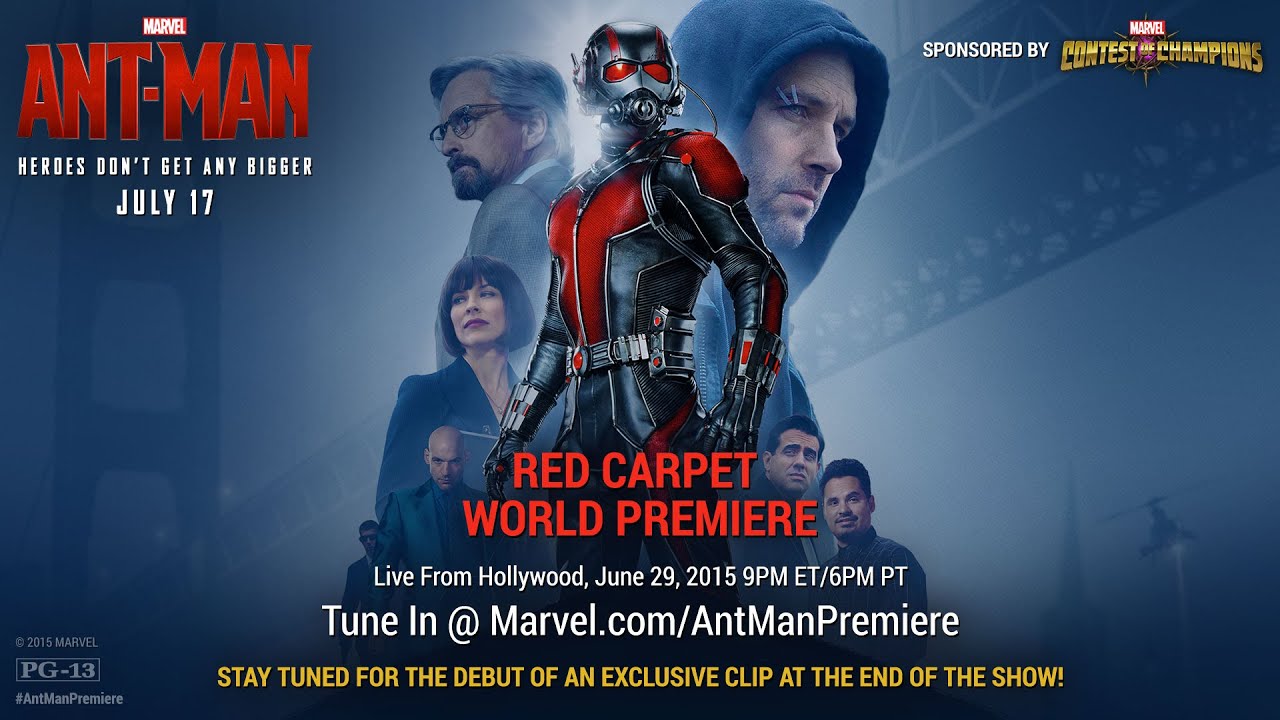
Ant-Man Watch here.


I wasn't interested in this movie in the least when it was announced, nor when the trailer came out. Never cared for the character. Especially not in the comics. (What kind of sense am I making now?) I thought he was, well, stupid. And so was the concept. This film from Marvel studios, a study in basic plot points right down the line (Misunderstood hero making mistakes, check. Estranged family, check. Rich benefactor, check. Crazy estranged family member of rich benefactor, check.) soars and sails and SINGS on its actors and the help given them by the writer and director alone. The sole direction (I imagine)? Have fun!

Creed Pre-Order Here.


I haven't seen it, yet. (Give me three days.) It came and went too fast in my area. I have it on my list as a representative of sheer filmmaking prowess by Ryan Coogler. He did something that Sylvester Stallone did almost 40 years before, in a day when people thought film people couldn't do that anymore. And Stallone got the Oscar nom out of it. Go figure.

Mission Impossible - Rouge Nation Watch here.


Action movies are supposed to be fun, and this movie was fun.

Maze Runner: Scorch Trials Watch here.


What can I say? I'm a fan. Not everything is supposed to me a Very Important Movie. And it can still turn out better than most of the VIM's out there. Even more than SPECTRE??? Well, no. Maybe not. But then this is MY list of the best films to watch from 2015. And I had consistently more fun in this film than that. So maybe yes. So perhaps you'll have to see both. Which is why people make lists. (SmileyFaceEmoticon)

The Walk Watch here.


Watch it with all the lights off, and as close to the 55' (or better) screen as you comfortably can.

---------------

So that's the list according to some guy who runs a production company in Tulare County, California. I love the movies. I love stories.

 I hope you enjoyed a few this year as well.


Friday, August 7, 2015

Academic Malfeasance: The Movie - Full Pitch

Academic Malfeasance: The Movie - Full Pitch from Eric Clermont Player on Vimeo.


Newest pitch for "Academic Malfeasance: College Funding With One Simple Felony," for the next Kickstarter Campaign by Panther Pictures, LLC. Includes references to the reel of writer/director Eric C. Player, and the latest teaser.  http://www.am-themovie.com


"Academic Malfeasance: College Funding With One Simple Felony" is a comedy about the state of both education in America, and Prisons.  Because the world needs more Prison Education Comedies.  Come to think of it, this might be the first one.  It's about one high school graduate's idea to use the prison system to get his college education, even if he's never stolen a pencil.

Sunday, January 11, 2015

Best of 2014

The Golden Globes are on tonight, the First Official List of What Hollywood Thinks of Itself of 2015. Thanks to the reshuffling of Awards Season a few years back it is the opening gun of all the Official Lists. Lots of people make a list of what they think were the best films of the previous year about this time of year. And here, in the tradition of Perd Hapley, is another one (mine).

10) Chef
9) Boyhood
8) The Imitation Game
7) The Good Lie
6) Life After Beth
5) Sharknado (Theatrical release, Rifftrax Night At The Movies)
4) The Hundred-Foot Journey
3) Captain America: The Winter Soldier
2) Guardians of the Galaxy
1) The Lego Movie

I believe animated films are just as entitled to "best of" lists as any other, without being segregated away from the "real films." and "The Lego Movie" was just the best movie made this year. No contest. It is full of joy, wisdom, love, laughter, and technical mastery on a level that Lucasfilm used to achieve.

I'm aware there are other "important" films that were released this last year, many that you will hear about tonight. I tip my hat to them. I look forward to adding them to my collection. And I enjoyed George Clooney and Michael Keaton's speeches along with everyone else. But THIS is MY list.

Monday, December 22, 2014

Conduct on Set

I just found this excerpt from the writings of Edward G. Robinson--THAT'S RIGHT, EDWARD GUN-IN-YOUR-FACE ROBINSON--about dealing with difficult actors on set. It comes from a time when he was working with Miriam Hopkins (never heard of her? There's a reason!) On a Howard Hawks picture called Barbary Coast. It is a lesson in throwing away your opportunities.

Enjoy:

Barbary Coast (1935)
Production Company: Paramount
Director: Howard Hawks
Cast: Edward G. Robinson (Luis Chamalis) - [Left Pic]
Miriam Hopkis (Mary 'Swan' Rutledge) - [Center Pic]
Joel McCrea (Jim Carmichael) - [Right Pic]
Walter Brennan (Old Atrocity)
Frank Craven (Co. Marcus Aurelius Cobb)
Brian Donlevy (Knuckles Jacoby)
Clyde Cook (Oakie)
Harry Carrey (Jed Slocum)
Donald Meek (Sawbuck McTavish)

"Miriam Hopkins was a horror to work with. I worked with her in Samuel Goldwyn's Barbary Coast. Well, you couldn't exactly say that. I tried to work with her. She made no effort whatever to work with me.

"However, Sam Goldwyn, who denied absolutely that he fired me out of the silent film he'd made with the Selwyns (Fields of Glory), worked very hard to persuade the Warners to loan me out for Barbary Coast. While they were gleeful about the success of the Columbia film (The Whole Town's Talking), they now thought me hot again and wanted me for their very own. What they wanted to put me in was quite another matter more of that miserable gangster, a character of whom I was growing wearier and wearier all the time. The Goldwyn film, written by Ben Hecht and Charlie MacArthur, offered good writing, a fascinating character, and a director named Howard Hawks.

"I shall spare you the titles and the directors Warner's offered me and certainly the miserable scene that went on in the front office as I turned down every script and simply looked haughty when they mentioned suspension, that dread word that meant you'd not be paid and could not work for anyone else. While their other troubles with Bette Davis and Olivia de Havilland and, I suspect, Errol Flynn and Jimmy Cagney, were matters of public notice, I tried to keep my differences private. I had long since learned that you could do anything to Jack Warner except humiliate him. (It is easy to do; under that tough clown's façade he is easily hurt. Despite his wealth and power, I have always felt him to be insecure. I mean it as a compliment.)

"Finally, after Goldwyn must have offered more than twice my salary, Jack let me go, assuring the newspapers the loan had been mutually agreeable, and even letting one columnist say that he was so concerned over my career that he had ranged over every studio to find something suitable for my talents. The inference was that, if not minimal, they were certainly limited. Jack Warner was always certain of the last word, and we talk of it often and laugh about it. Jack would rather laugh than anything in this world except have the last word.

"Without consciously affecting the posture, I decided it was necessary to act younger than ever, more aggressively, more affirmatively, more conscious that each day must have meaning. Howard Hawks was the first recipient of that attitude. Or was it Miriam Hopkins?

"It seems remaining with me still were some of the remnants of my childhood chiefly an almost instinctive reaction to people: from the very beginning, when I was introduced to somebody, or even saw him from a distance, I either liked or disliked him instantly. I have a psychoanalyst friend who tells me in a very scholarly way that this is not in the least unusual among the foreign born and minorities. They (we) tend to be suspicious of an attitude, a look, narrow eyes, thin lips, blond hair. I cannot agree that this is altogether a fact. If you will remember, when I discussed long ago the Principal of Public School 137, she automatically had all the things I was taught to dislike. She was tall, Anglo-Saxon, thin-lipped, but at the same time she was warm and outreaching and friendly. Above all, she did not patronize me.

"So I think my psychoanalyst friend is wrong. But people do give off auras and I respond to them automatically. It is not only with human beings that I have this weakness of character; it is also with paintings.

"At the time of Barbary Coast, my character flaw of first impressions was at its height. All of which, of course, brings me back to Howard Hawks and Miriam Hopkins.

"Howard seemed to be patrician, aristocratic, and I sensed he was looking down his nose at me. I've learned to know him well since, and my initial assessment of him was wrong. His manner was concealing his own doubts, his own fears, his own insecurities at starting a new picture with a bunch of temperamental actors.

"I do not propose to say the same thing about Miriam Hopkins. She was puerile and silly. There was one thing I recognized in her that could have made us friends: She, too, had come from the stage; she, too, felt that movies were beneath her. I had gone through the same thing; I had been graduated from that stage.

"How odd, then, for me to be the recipient of the kind of snobbery that I, myself, had indulged in for so long! Even though I didn't know it then, it was clear (in the words I spoke over and over again on the screen) that I could dish it out but I couldn't take it.

"In addition, the set of Barbary Coast was highly politicized. As I look back on it now, I really don't know the individual political stances of the company, but I'm sure of this: Hecht and MacArthur were liberals; Howard Hawks, Miriam Hopkins, Joel McCrea, Walter Brennan, and Harry Carey were not liberals. We were two warring camps, and that kind of deep dispute was going on in every studio and every living room.

"The arguments on the set were appalling; as a result, there was little socializing among us. There was a good deal of polite freezing and occasional bursts of rage.

"This political sentiment took its toll in many ways. Miss Hopkins complained bitterly about every line, used every trick in the book to upstage me. I had long ago learned that these upstaging manoeuvres would not work at all in films. The cutter could attend to them.

"But when Miss Hopkins refused to stand on her marks, those little triangles of masking tape that set the actor within the proper range of the camera, it was too much. What was really too much was that Miss Hopkins, in period costume and headdress, was taller than I. When we did a scene together, Miss Hopkins wanted me to stand on a box. I refused, not only because it was undignified and made me self-conscious but because I was unable to play with any sincerity high on an insecure perch. My suggestion was that Miss Hopkins take off her shoes. When I think of it now, I suspect she could not play with any sincerity standing in her stockings.

"There were other problems between us. In the making of a picture, frequently a scene between two people is broken up so that you get a closeup of one and then the other. When the closeup is of you, you play a love scene to a camera lens, and the other actor reads the off-scene lines from beside the camera. This is common courtesy in the making of a picture, and even the most illustrious of stars are willing to do this difficult chore. But Miss Hopkins was not.

"When they did my close-ups, I read my lines and Miss Hopkins lines were read by the script girl. This infuriated me, and my revenge was to elaborately read the off-scene lines when it was Miss Hopkins turn for a closeup. This taught her nothing.

"Miss Hopkins is recently gone, and I'm sorry about that, of course. However, since these matters might help other young actors, I'm forced to proceed with them. The indictments:

1. Miss Hopkins was always late.
2. Miss Hopkins would never read a line precisely as it was written, thus not cuing me.
3. Miss Hopkins would make us all stand around and wait while she complained bitterly about her costumes.
4. Miss Hopkins indulged in every trick to delay, to confuse, to obstruct and to prove that she and not I was the star.

"Mr. Hawks tried to cope with these four lunatic types of behaviour and, I'm sorry to say, I don't think Mr. Hawks coped very well.

"As a result, one day, I told Miss Hopkins off. I shouldn't have done it, but I was fed to the teeth. I reeled off a litany of her mischief. In the first place I told her that temperament had gone out of fashion that it had worked in the days of Fritzi Scheff, Mrs. Fiske, and Mrs. Carter but it simply did not have any place on a movie set. Then, thinking of her own good, I told her she was far too conscious of the camera; she hugged it and thus defeated herself. I showed her how, in her attempts to upstage me, she would back up on her own lights and I did all this, unforgivably, in the presence of the cast and the crew. They remained silent.

"The next scene we had to play was one in which I had to slap her. Slapping, to say nothing of hitting, punching, kicking, and general brutality in films is usually faked. I wanted to rehearse this fake scene with the lady. But she wouldn't have it. She looked me straight in the eye and spoke very loud so that the entire company could hear.

"'Eddie,' she said, 'let's do this right. You smack me now so we won't have to do it over and over again. Do you hear me, Eddie? Smack me hard.'

"I followed her instructions. I slapped her so you could hear it all over the set. And the cast and crew burst into applause.

"If you will examine the credits for that movie, you will see, almost at the end, the following: Sailor (thrown out of saloon) David Niven.

"Whether David applauded, I know not. I did not meet him for years. When it happened, we scrupulously did not discuss Miriam Hopkins or my atrocious behavior."

Excerpt from All My Yesterdays by Edward G. Robinson.

--------------

I think it is so classy that in the end he points to his own "atrocious behavior" on set. Actors (and we all), should learn from this man and hold themselves to a higher standard when getting the work done.