Search This Blog

Showing posts with label Writing. Show all posts

Friday, July 16, 2021

In Response To Ralph Nader, John DeLorean, And Road & Track Magazine

Bear with me. This is going to be detailed response to an article in Road and Track, "Ralph Nader Can't Slow Down."

-----

The article is a new interview with Ralph Nader, written by Patrick Carone, and reprinted on their website on July 13, 2021. In this article, Ralph Nader is quoted as justifying his feelings about the Corvair through a reference to John DeLorean's book, "On A Clear Day You Can See General Motors." He says DeLorean agreed with him. He says DeLorean references executives on the subject, and that there was something about "the kids killed at Grosse Pointe" in DeLorean's criticism of the Corvair.

"Since we’re clearing the air, do you have a message for Corvair fans?

"They should be worried about how the Corvair treated people. Just look at [John De Lorean’s account] On a Clear Day You Can See General Motors. There’s a lot of stuff on the Corvair from the executives themselves about the kids killed in Grosse Pointe and all that. You know, 30 years ago, I was invited to speak to the Corvair Society of America. They had a gathering in the Maryland suburbs outside Washington. They had hundreds of Corvairs in the parking lot, all nice and shiny. I walk in and everybody was very cordial, but there was a real silence in the room. So I said, “Look, there’s one thing we agree on: In this room are some of the best drivers in America—because you have to be.” Have you ever been in a Corvair? They’re unbelievably tight and uncomfortable if you’re anything over 5'10". I don’t know how anyone bought that car in terms of comfort. It’s a pretty car, no doubt. You know, we have one at the tort museum."

Mr. Carone does not challenge him and Ralph Nader gives no references. I would also like to point out that the tort museum Ralph refers to had an event scheduled by Corvair lovers, twice, in recognition of July 20th being Corvair Vindication Day, but it was cancelled in 2020 for Covid19 reasons, and again in 2021 out of respect for the passing of Nick Gigante, grandson of Frank Winchell, Chevrolet's head of research and development and fierce defender of the Corvair in its time. Nick used to say that the 1963 Corvair at Nader's "tort museum" (air quotes intentional, see the links regarding Vindication Day) was a hostage.

Concerned with what was being said in Road and Track about the most innovative car that was ever built in an American factory, I determined to do the journalism that Patrick Carone did not, and checked DeLorean's book (not really his book, but we'll get to that) out at an online library. There are nine references to Ralph Nader, two of them in the index, and referring back to the other seven. Seven different uses of Ralph Nader's name, in the service of DeLorean's complaints about his own treatment.

When the book first mentions the Corvair, it is in reference to the GM corporate attitude regarding executive viewpoints, and the lack of respect given to those viewpoints, in DeLorean's opinion. Specifically, he mentions the concerns raised in 1959 by engineers (who were not a part of the project). Well, "specifically" isn't the right term. On page 6 of "On A Clear Day You Can see General Motors," DeLorean says that "Charlie Chayne, vice president of Engineering [at GM], along with his staff, took a very strong stand against the Corvair as an unsafe car long before it went on sale in 1959." He also said Chayne was threatened with termination if he didn't "shut up."

There are several things wrong with Ralph Nader's exploitation of this statement. First of all, he fails to take into account the context of the entire book itself. The "DeLorean book" (air quotes mine) wasn't even written by DeLorean. The author is listed as J. Patrick Wright, interviewing John DeLorean. DeLorean had been fired and was participating in the book as retaliation. Wright's work was a thematic study of what was wrong with the way General Motors was run, not the quality of its cars--except in service of that theme. John DeLorean had wanted to become president of General Motors, and had been denied that. He (DeLorean) tells the Corvair story to illustrate the stifling nature of the General Motors corporate environment, not as a vindication of Nader. He was merely using Nader's complaints as a way of reinforcing his own position. Like Nader's book, John DeLorean and J. Patrick Wright are talking about the industry in general, not the Corvair specifically.

Neither of the positions John DeLorean takes are expressed in the form of direct quotes, they are interpolations he makes based on what he experienced. His specific use of the engineering complaints, and saying they originated long before 1959, is extremely suspect because the Corvair was a secret project within the company, supervised by Ed Cole until they were ready to reveal it, not just to the higher up executives but to the world. Seperate departments of General Motors at that time had autonomy on development and research. With the Corvair, Code names and dummy cars were used. Much of the development took place in Australia. Charlie Chayne, from sources I can find, is not mentioned as having any involvement. If he had objected to the Corvair specifically before its public announcement in May 1959, he was too late to do anything about it, because he didn't know it existed: Ed Cole revealed the near-completely developed car to the engineering department after the launch of the 1958 models, and after he had the backing of GM president Harlow Curtice.

Engineers were of course used, but Corvair history says that executives in the top engineering department were surprised by and suspicious of the project. If DeLorean is to be believed regarding the corporate culture, this would be because "Chayne and his staff," Chayne being the only executive mentioned in "On a Clear Day..." by name, knew they couldn't take the credit. They weren't on the team, as DeLorean says.

Furthermore, any examination of the history of rear engine vehicles in America in general shows a bias against them, perhaps due to the designers' inability to find a way to integrate the technology into American design standards of the time. An article in the April 1949 issue of Mechanics Illustrated, provides a very interesting insight into what the American automobile establishment was doing with and saying (and rejecting) about rear-engine technology at the time.

As long as DeLorean and Nader are speculating, why not speculate that Ed Cole and Charlie Chayne would each have read that same article? After all, it was published only a few years before Ed Cole began developing the Corvair project in 1955. At any rate, the Mechanics Illustrated cover story gives some context as to why development of the car was such a massively covered-up secret. The top engineers of the time, who were often the least innovative men with the most to lose, had not dismissed the Corvair; it didn't exist. They dismissed all rear engine vehicles in general.

The only references John DeLorean makes in Wright's book to the idea of the Corvair killing people, are when he is making the point, summarized on Page 6, and expanded in pages 64-67, that, often because of peer pressure, men will approve something as a group that they would never approve as individuals. In his indictment of corporate culture, DeLorean uses the Corvair and its victims (all cars have their victims) as a symbol, without any consideration of whether he gets the facts right about the Corvair. His only point is to, well, be seen making a point.

But getting back to Ralph Nader and his use of John DeLorean as an authority: Much like people who also use Ralph Nader's own book as an authority, it is clear that Ralph hasn't read "On A Clear Day..." in a long time. Nader says, "There’s a lot of stuff [in the DeLorean book] on the Corvair from the executives themselves about the kids killed in Grosse Pointe and all that."

Hmm. We've seen where that mention of "the executives" gets us, now let's talk about Gross Pointe. Which we can't, because the words are not uttered anywhere in "On A Clear Day You Can See General Motors." Not even in the index. The only reference I could find was in a Wikipedia footnote about the book, indicating Grosse Pointe as the origin of publication. But the actual book's copyright page mentions only New York and Chicago. Perhaps he was refrencing the fact that many GM execs gave Corvairs to their teens--who yes, crashed them--and that they lived in Gross Pointe, but Nader's statement seems to be a complete fabrication. Or, being charitable, a dim recollection. Much like his recollection of not owning a car after his 1949 Studebaker, while failing to remember that he owned and sold a Corvair in 2016.

Nader does give an accurate description of the time he was invited to speak at the Corvair Society of America, at least as far as he remembers it, but his audience no doubt remembers it quite differently. Memories are subject to our experience. What isn't subject to experience is the written word. And the written word on the Corvair is that it is fine, at least in comparison to every other American car made at the time. You can read the National Highway Transportation and Safety Administration's 1972 statement about that for yourself.

I invite Ralph Nader to do a bit more reading of his own. To read particularly J. Patrick Wright's work, "On A Clear Day You Can See General Motors," before claiming any knowledge on the subject. I invite Patrick Carone to do the same.

Eric C. Player
President
Panther Pictures, LLC

P.S. - One other thing, I have been in three road accidents in my life involving the Corvair, in 1989, 2006, and 2007. Each of them were the result of the other driver's inattention to the road, as verified by their insurance. All resulted in substantial damage to my Corvair, and one completely totaled both cars. I walked away from all of the accidents unharmed. Probably why it was Car of the Year in 1960. Consider that.

Footage of a car expert testing out Ralph Nader's Corvair

Framing John DeLorean, the Movie

Blue Ribbon Corvair - 1960 Car Commercial

Monday, October 24, 2016

Writing Exercise: The Fruit

"Go ahead, Ted. Do it."

Ted Wilson stood looking down at the basket of fruit at the counter of the Gulp'n Go. He didn't particularly like fruit. And most of it in the basket looked like it was about three days too old. The bananas especially looked as though they had been resigned to showing up in a bread recipe about 48 hours ago. Really, all he'd come in for was the candy bar.

But as much as he was disinterested in the fruit, he was more interested in annoying the Blaarg. The Blaarg behind him was making that "trilling" sound they all made. It was waiting its turn, but it really seemed like it wanted the fruit. Ted hated Blaargs. Was it hate? No maybe not hate, he just didn't trust them. Ever since they showed up in those goldish silvery tube things promising peace and prosperity to the people of Earth, he'd just never had a really productive or satisfying day. This is peace? Nothing has ever fit the same--these alternative-fabric-renewable-cotton-what-the-heck-whatevers that they call clothing now . . . Margot says it's in his mind but they itch, and all the fasteners are in the wrong places!

The little voice in his head spoke again: "So just Do it, Ted. Go on."

The girl behind the counter was a little impatient: "Just the candy? Is this all for you?"

Ted decided to go for it.
"No, I'd like the fruit, please."
"Which ones?"
"All of them."

The Blaarg behind him made a sound like a cat with a bag over its head having its tail squeezed. He was right. It wanted the fruit. Somehow, knowing a Blaarg would be disappointed in this way made Ted Wilson feel extremely satisfied. He was tired of caring what they thought and when he got home he would tell Margot exactly that.

Ted paid for his fruit and his candy bar and left the Gulp'n Go. Outside, his motorcade was waiting. As was Bob, who was ALWAYS waiting and watching.

"Did you find what you needed, Mr. President?"

"And more, Bob. Thanks for the detour. Sorry for the delay--ggaahh.."

President Wilson's final words were choked in his throat by the Blaarg, a bulbous, tentacled species who communicate through a series of whoopee-cushion-like muscle contractions. This one no longer felt like talking.

The Blaarg fleet was also about 17 1/2 times larger than they claimed when they arrived. With much more advanced weapon systems than originally thought. The people of Earth would spend the next 27 years dealing with these revelations, until an alliance with the Gruuun finally ended the Blaarg War.

The Gruuun did not eat fruit.

Tuesday, May 3, 2016

That's Not A Bad Sandwich, DaveNotDave - The Long Germination of a Short Film

“Moment of Anger” is meant to be a tale about a man forgetting what is good in life, and life itself helping him remember. The process of creating the movie was in turn a “remembering.” We each of us found what was best in our talents and put them on the screen. This is the story.

All of my film ideas percolate for a long time, before pouring out of me in a rush, like a cook leaping to take care of a stove that is boiling over. The first germ of “Moment of Anger” starts in 2005, with my divorce. Not that I would have recognized that at the time. I had absolutely no self-awareness that there was anything about myself that would make me hard to live with. All I knew was that I had been hurt and I couldn’t understand why someone would be so cruel. You know, to me.

Flash forward ten years, and I am married again to another fantastic woman. (How do I attract these Mighty Aphrodite? All I know is it must be what Opus the Penguin once described as the “Billy Joel/Christie Brinkley Syndrome.”) I am only slightly less self-aware of my personal faults than I was then, which means a lot of frustration for the people who love me. But ten years also means that the screenwriting degree from BYU I held in 2005 has been PHD’d (Piled Higher & Deeper) with a Film & Television Producing degree from Chapman. So while I may not be (I may never) fully equipped to engage in an emotional relationship, I am completely qualified to entertain the masses about my shortcomings!

It was around Valentine’s Day 2015 (ah, romance) that I determined my hands had been idle long enough and it was time for me to make another feature film. In my film career, which I chart starting in 1995 with my first semester at BYU, I have been involved with 2 features that have made it all the way to theaters. At Chapman, I had been engaged in the production of several short films as well, but the features, the big projects, have always been the ones that excited me, so I said, “I want to do that again.” I spent the next year reminding myself why my 21 years in the business working for myself have resulted in a grand total of 2 features: Wow, it’s HARD. My first was a coattail kind of thing, anyway. And my second almost never saw the light of day. 2016, and that third one is still a script, a dream, and a Facebook page, but it will come.

I told you about that project because it, too, led to “Moment of Anger.” It was in the face of another schedule stall, yet another pushing back of the goal post, that I was contacted by an actor friend who wanted to know if I could help him “put something together for his reel.” He was thinking of some mock commercials. Stuff that could be done quick, without renting a lot of equipment, just whatever was on hand. He had an idea or two, and he asked me to improv some for him. That sounded super . . . super. But he was a longtime friend and I honestly had the time, so we set a date. Then as I started to gather the crew for THAT shoot, I stood in the shower and asked myself: Given the opportunity of working with one of the best actors I knew (seriously, Gary, you’re awesome) and doing whatever I wanted . . . was this what I wanted to do? If not, what did I want to do? What was my story, and where did I want to tell it?

Porterville, CA, is, and used to be widely known as, the “Gateway to the Sequoias.” There is an old motel here in town of the kind they sing about in the movie “Cars.” Long ago but not so very long ago the Palm Tree Inn was known as the Paul Bunyan--complete with statute of the Legend Himself and Babe the Blue Ox--it was a bustling tourist stop, restaurant, bar, and dance hall. Today, it is thriving on business of a different sort. (Seriously, a week after we shot our movie the place was raided.) The subtext for great potential squandered . . . well, it couldn’t be LESS of a subtext, it is so RIGHT THERE. That was where to set the story. The story of a man who takes a wrong turn in his life. A man who has gotten in his own way, and could lose everything if he doesn’t face up to it. Will he? Or will he run away?

There is a lot of me and my experience in “Moment of Anger,” because I have more than once stormed out of the presence of people who love me, unable to say how I feel and unwilling to strike out physically; I could never be that guy. Of course, being adverse to the bad side of things sometimes means you’re not very good at the positive side, and so I am either too clingy or inarticulate with the people who matter--much like Dave, in “Moment of Anger,” who screams, leaves, and then instead of returning and apologizing goes off and gambles with a stranger, losing his sandwich. And as that plot swirled in my head, bizarrely, I began to hear the haunting lyrics of Dolli Grace mixed with the upbeat sound of Cordwood.

And so I stepped out of the shower and contacted Gary. By the time I proposed the idea to him it was almost fully formed: A man who storms out on his woman, but then has a very bad day, culminating with being trapped by drug dealers. He has this day because she had been the best thing in his life, and after 5-10 (my timeline is unspecific) years with her he is unable to really handle his life without her. People are only happy in pairs. (“Enchanted April,” 1991).

Gary was on board almost immediately, as was the rest of the pre-production crew I had originally begun to form for the “commercials project.” My co-producers Kanarose (my producing partner on literally everything over the last ten years) and Matthew (new to my usual team, but fantastic) helped immensely by being interested in the story and offering their own takes on the material. Kanarose has always been great for bringing up things that need to be done in pre-production that I usually forget, and always pointing out where I’m being stupid or boring. Matthew would contact me at random times with story ideas, good ones, some that made it to the screen.

Our main snags were 2 things: I wanted a professional cinematographer, I knew I didn’t want to shoot it myself. And we had to shoot the entire script in one day. I am a screenwriter, a producer, and a sometime director. I am also and mostly a dad, and one day in March 2016 was all I had for this one. As it happened the schedule constraints affected the search for a cine. Initially, a friend of mine whom I’d worked with on several projects was on board, then he called and said he was having Oral Surgery the day of the shoot. After an intense search (I believe I talked with a dozen different DPs) I had the good fortune of stumbling across the work of Adrian Sierkowski. And not just the work, but the man.

Adrian was a joy to work with because HE found the work to be a joy. He has filmed on all sorts of cameras from Big Budget to Garage Band (for lack of a better term) and what mattered to him was getting the most out of what he had--as opposed to some DPs where all they seem to want is to “get the most” (as in toys). Even so, our original DP still provided a great light package on top of what Adrian brought to the table, so I really believe that our production was able to look 100x more expensive than it really was. Good DPs matter.

So, that second problem: a one day shoot. How do you make that work? Well, after securing the locations, the #1 way to keep on point with that is a good Assistant Director. Personally, I always think women make the best ADs, particularly 1ADs. You may not believe this, but a strong woman commands attention, and everyone listens to her. I spoke to a couple of women in the run up to March, some that I had worked with before, but nothing was gelling. So we were very, very fortunate to have the schedule open up for one of the best in the business in this regard, Sharmane Franklin Johnson. Sharmane kept us on point, on time, and while we originally worried that our shoot would run overtime, working with me in the Director’s chair and her as my co-pilot on set, she had us wrapped 2 hours early.

I can’t end this without saying something about my lead actors. First of all, Gary Klavans, my star and the spark for the project, was a trooper and true professional. Everything he did was practically without me telling him. “Let’s do that again” meant more to Gary than a straight repeat, and he always found ways to give me exactly what I asked for in every take, making every one seamless, but at the same time there were subtle differences that would allow me to change entire tones if I re-arranged what he had done in the editing room. He is like the Algebra Actor.

Stefanie Halstead did so much with so little, I am humbled. When I cast her, I told her, “You speak hardly at all, but you are the center of this film. You have all the power here. His reaction to you. Whether he will go back to you. Whether you will TAKE him back. It is all you.” She really played with that. It is all up there on her face.

Bruce Allen Green was having so much fun. In life, he is a retired substance abuse counselor, and he channeled some of that experience back to his character--with, you can see, a bit of a wink at the screen. The production really rested on his shoulders, and not just as a character. At one point, we lost a location HALF AN HOUR before we were supposed to film there. Instead of taking his lunch break, Bruce was on the phone, and by the time we were ready to shoot we had a place to shoot in, and better than the old location.

I could go on, even about my support actors, but you need to go. (Have a sandwich.)

“Moment of Anger.” A Film by Eric C. Player. A love letter to life, marriage, frustration, commitment, and sandwiches. Enjoy.

Saturday, February 13, 2016

Best Films of 2015

As Valentines Day comes screaming toward us, and the Oscars--and all their attendant screaming, especially this year, get ready to go in the next two weeks--I am finally ready, upon reflection, to say what I think were the best offerings from Hollywood on 2015.

"The Best From Hollywood" will always be my broad statement to mean the film industry, and particularly the American Film Industry. It is what I have been a fan of my entire life; it is where I work now. No disrespect to the movies coming out of other nations, at all. (I get that we Americans make Bond Villains out of actors who do fine work in other places.) They just aren't what I study or follow, so I leave them to those who do.

Please also remember that my list is not merely a reflection of that industry. It is a reflection of myself within it. What has resonated with THIS PERSON this year? Professional critics may or may not like to pretend otherwise, but everything in this business, outside of "Could you see and hear what was happening on the screen?" is subjective. Honestly, I think that is why friends (or people without a lot of time) working in the same circles end up with the same movies on their lists. All. The. Time. I'm no doubt gonna have a few of the Must See Movies here, too, but I hope I will surprise you. A little.

As usual, there will be ten, but they will not be ranked. They will just be.

Bridge of Spies Watch here.


The story of an Insurance Lawyer, played by Tom Hanks, defending an accused and pretty much guilty (but nevertheless deserving of a fair trial) Soviet Spy, played by the great Mark Rylance, and the dividing of a nation. Well, not really. Everybody pretty much hated them. The story sure divided our family while we watched it, though. More than any movie had done in a long time. The Mrs. and I yelled at the screen and yelled at each other as we compared the social issues of 1957 to today, to then, and as we discussed vehemently whether Hanks was right to do what he was doing. Surprising me most pleasingly, I was identifying with Hanks, while my wife, a professional woman with two giant organizations at her feet, worried for Hank's at-home wife and her issues, played stoically well by Amy Ryan.

Home Watch here.


Yep, I'm already diverging from what ANYBODY else has on their top ten list, aren't I? I don't know why this little animated gem was overlooked this year, even in the animated category. (Well, of course I do. It's a road picture. The Academy has been there, done that.) I loved it. It made this guy blubbler at Toy Story 3 levels. And it has the SHUSHER, so . . . . Glad Mad! Best Day Ever!

Taken 3 Watch here.


I love "Take-you-down-I'm-Sexy-and-I-know-it-BOOM" movies. I watched this one as part of a triple feature with the other two, on a day in January when I really wanted to hit something. A nice touch with this film was that they added the Hitchcock "wrong-man" plot that the Master of Suspense used so often, but it was like: Imagine if the cops and bad guys had tried to pull that crap on Liam Neeson?

The Revenant Pre-order now.


From the release of the trailer, this movie surprised me. Oh, I don't mean the plot. Revenge movies are revenge movies. But The film it reminded me of, in so many ways and in so many areas of its artistry, was Never Cry Wolf from 1983. That's a good thing because I loved Never Cry Wolf. After that all things pretty much ended. It was its own thing. It was like other films in the way that Stagecoach was like Maverick because they both had stagecoaches in them. Those who have complained (or at least casually commented) that it was somehow magnificently shot and yet simple minded in its storytelling, are frankly wrong. The screenplay in this film was one of the most beautiful I have ever had a chance to watch. It was lovingly structured, strongly-built, took its time but did not feel boring, and what I found especially effective, was that even though this was essentially the story of two men, all of the side characters had depth and weight and were easy to identify with no matter how much screen time they had. I particularly identified with Domhnall Gleeson's Captain. Frankly he was my most identifiable character, even above DiCaprio's character, and he did not spend all his screen time telling me who he was, he simply Was. That is a very difficult task for a writer, which the screenwriters pulled off brilliantly.

The Martian Watch Here.


A movie about surviving by your wits in space. Essentially, Apollo 13 on Mars. Not true like the other film, but oh so possible. This one did a great job of making us believe in human ingenuity again. Did you know Matt Damon was in it?

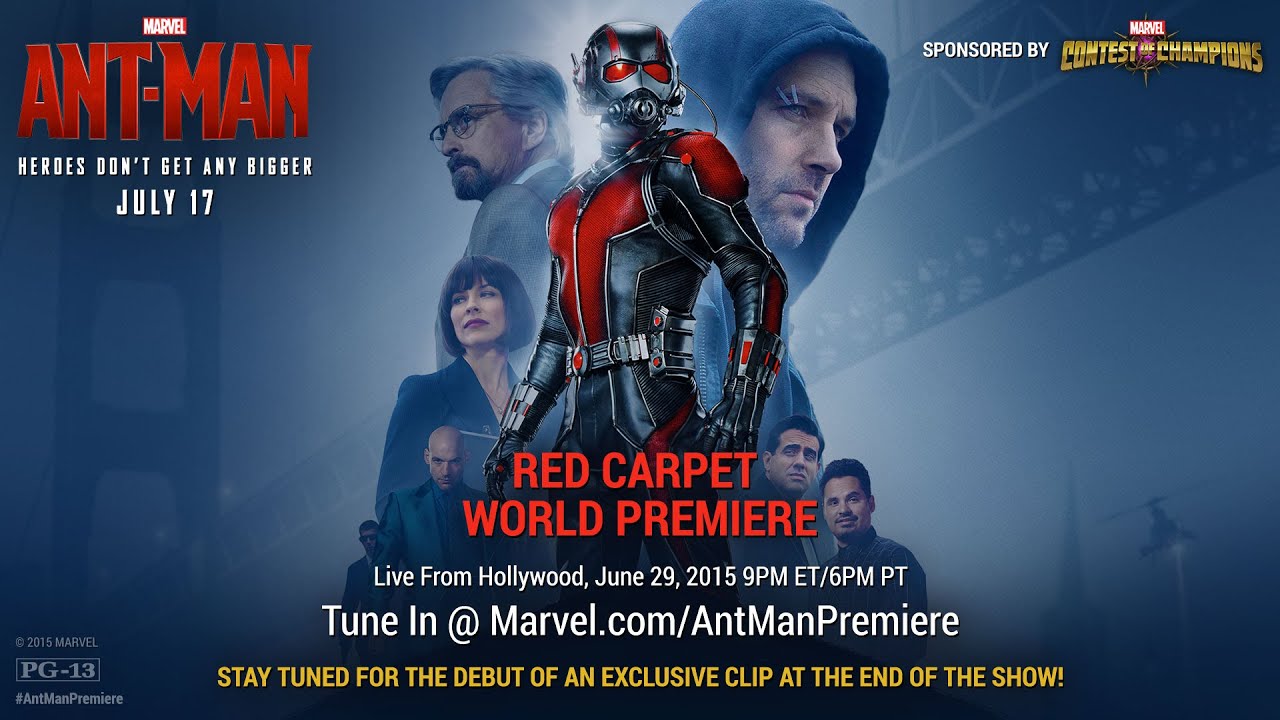
Ant-Man Watch here.


I wasn't interested in this movie in the least when it was announced, nor when the trailer came out. Never cared for the character. Especially not in the comics. (What kind of sense am I making now?) I thought he was, well, stupid. And so was the concept. This film from Marvel studios, a study in basic plot points right down the line (Misunderstood hero making mistakes, check. Estranged family, check. Rich benefactor, check. Crazy estranged family member of rich benefactor, check.) soars and sails and SINGS on its actors and the help given them by the writer and director alone. The sole direction (I imagine)? Have fun!

Creed Pre-Order Here.


I haven't seen it, yet. (Give me three days.) It came and went too fast in my area. I have it on my list as a representative of sheer filmmaking prowess by Ryan Coogler. He did something that Sylvester Stallone did almost 40 years before, in a day when people thought film people couldn't do that anymore. And Stallone got the Oscar nom out of it. Go figure.

Mission Impossible - Rouge Nation Watch here.


Action movies are supposed to be fun, and this movie was fun.

Maze Runner: Scorch Trials Watch here.


What can I say? I'm a fan. Not everything is supposed to me a Very Important Movie. And it can still turn out better than most of the VIM's out there. Even more than SPECTRE??? Well, no. Maybe not. But then this is MY list of the best films to watch from 2015. And I had consistently more fun in this film than that. So maybe yes. So perhaps you'll have to see both. Which is why people make lists. (SmileyFaceEmoticon)

The Walk Watch here.


Watch it with all the lights off, and as close to the 55' (or better) screen as you comfortably can.

---------------

So that's the list according to some guy who runs a production company in Tulare County, California. I love the movies. I love stories.

 I hope you enjoyed a few this year as well.


Friday, August 7, 2015

Academic Malfeasance: The Movie - Full Pitch

Academic Malfeasance: The Movie - Full Pitch from Eric Clermont Player on Vimeo.


Newest pitch for "Academic Malfeasance: College Funding With One Simple Felony," for the next Kickstarter Campaign by Panther Pictures, LLC. Includes references to the reel of writer/director Eric C. Player, and the latest teaser.  http://www.am-themovie.com


"Academic Malfeasance: College Funding With One Simple Felony" is a comedy about the state of both education in America, and Prisons.  Because the world needs more Prison Education Comedies.  Come to think of it, this might be the first one.  It's about one high school graduate's idea to use the prison system to get his college education, even if he's never stolen a pencil.

Thursday, January 31, 2013

TRAILERS

Ever wonder why Trailers are called "Trailers"? They of course are also known as Previews, Ads, and Spots, but movie trailers got their name from the simple fact that when movies used to be exclusively distributed on film rolls, the previews were sent along attached to the trailing ends.

A good trailer can create just the right amount of buzz for a project, but it can also give too much away, through plot spoilers, in a way that makes moviegoers feel they have no need to see the finished project. Of course, if you are too vague, the audience that comes in might think they were mislead about what they have come to see. It is one of the most difficult, and most underrated, art-forms in the industry.

Here's an example:

Sunday, August 19, 2012

Content: For the Cause!

Over the last 17 years that I have spent in the entertainment industry, I have heard many different talking heads give their opinion about what will or won't get you a job in "this town."

You need to know somebody. You need to be a fresh face. You need to pay your dues before you come out on top. Only submit your work to the top companies. Submit it to everybody. Take classes. Stay away from classes, just get out there and work. Go to festivals, don't go to festivals. And on and on.

Screenwriting IS a language. There ARE patterns to follow. Otherwise, all you have is noise. Like the difference between a well-made film and a static-filled TV screen. But William Goldman is right when he says, "Nobody knows anything." There are a hundred "rules" out there, and I've heard all of them. You will too. Heck, I'll lay out plenty when I read your work. (I mean, you have to know the rules before you can break them.) But what trumps them all is YOU HAVE TO BE OUT THERE.

Don't paralyze yourself because you think you might not be doing it right. Write the screenplay. Make the short film (heck, make the whole feature if you have the time), enter that contest. Send it off to that agent, that producer--even if they are based in Hoboken, CA, as opposed to Hollywood, CA. (But by all means, knock on Hollywood's door first.) Because nobody ever got a "Yes," or a "No" for that matter (and you will get hundreds and hundreds) without making something for the rest of the world to judge, first.

And isn't that why you want to be in this business? :)

Wednesday, November 24, 2010

Agents

You need one.

Blessing and a curse. A necessary evil. A detector in a field of mines.

Generally good people. (Everybody has to make money--everybody wants to make money.) The waiting will make you antsy, then curious, then furious.

The most important thing about your agent will be 1) Your relationship with them. 2) Their reputation/expertise.

For my history with agents, read here (Do a "Find" for 'Eric Player') and here, and here.

Thursday, September 30, 2010

Coverage

The first job a writer will probably have in this town will be as a Reader for a Producer, production company, or literary agency. Here's the typical format for providing "Coverage" for a feature script:

(NOTE THAT THE RATING SCALE FOR THESE DOCUMENTS IS 1 TO 5, WITH NOTHING LOWER THAN 4 GENERALLY BEING CONSIDERED. THIS SCRIPT WAS A "PASS.")

MASON MULE
Coverage by Eric Player

TITLE: Mason Mule FORMAT: Feature, 149 pgs
AUTHOR: Unknown GENRE: Drama
COVERAGE DATE: June 29, 20** CIRCA: 1950's - Present
COVERAGE FOR: ****Films LOCALE: Anywhere, USA

RECOMMENDATION: Pass but consider again after a major rewrite

STORY 3
STRUCTURE 1
CHARACTERS 2
DIALOGUE 3

LOGLINE:

A father uses the major inspiration in his life to help his son find the motivation to be a better man.

SYNOPSIS:

ACT I:

MASON MULE introduces himself and makes the case that stories are what build and motivate societies and individuals. He says he is going to tell the audience a story. 1983 – Camera lifts and glides to ROMAN (31) and VICTOR (8). Roman is getting ready to tell Victor a bedtime story but Victor has heard them all and is sick of them.

The next morning, Roman has to go see the principal of Victor’s school because Victor has been caught stealing. Concerned, that night at bedtime Roman begins telling Victor a new story–about himself in college before Victor was born. Roman used to live two lives, writing sensitive stories for class and working a “burger-jockey” job by day, and acting the playboy with his friends at night (or in classes he isn’t writing for).

One day, his two worlds almost collide when a beautiful TA named CLARISSA tries to compliment him on his writing, but he denies it and insults her. Later, his worlds do collide when Mason sees him at work and Roman asks him to keep it a secret, fearing this will tarnish his image.

Mason does, even helping Roman arrange a date with a hot chick on campus. The date goes horribly wrong, however, and Roman loses his wallet. This starts a chain of events that reveals his secret life and his penchant for stealing. Roman loses everything, but in doing so he re-connects with Clarissa, the girl he insulted and they begin dating. It is here that Mason admits to stealing the wallet to “kick Victor in the a--.” Roman wants to kill Mason but in the end just cries in his arms.

ACT II:

Inspired by the story of Mason, Victor begins a search for him by calling the telephone operator. He also wants to know more about him, to emulate him. Roman tells more stories, including the time Mason won back his father’s job for him when Mason was about Victor’s age. At first, Victor tries to do the things his father told him Mason did, but they don’t work for him, so he goes right back into being a bully.

This doesn’t sit right with his father, of course, so Roman tells victor more stories of how Mason channeled his energy and skill into other avenues–saving for a drum set, meeting and playing with a mystery violinist, becoming the projectionist at a local theater, and saving the high school dance during a blackout.

One wonderful thing that Mason does with his ingenuity and strength, instead of being a bully, is to save a friend who used to bully him from a car crash. Mason is famous for wearing a tattered baseball cap and this is where he wins it. This is also where he wins his drum set for putting his friends first.

As time wears on, Victor patterns his life less like a desperate teen and more like the Mason Mule he hears about in the stories. One day, at 16, his father tells him he has found Mason on the lecture circuit and they will be able to have lunch together soon.

When they meet, it is the greatest moment of Victor’s life, though he is a bit embarrassed that he doesn’t have more to say. The one thing Mason tells Victor to take away from their time together, is “you’re you, not me, and you’re a better you than anyone. The only ‘answer’ I’ve ever found to anything is the exchange of ideas.” They agree to keep writing.

This goes well for a while, but when Victor can’t get into any of the Medical schools he wants to he becomes depressed, and writes Mason saying he wants to cut off contact. Mason tells Victor about the time he was lowest–he had found the love of his life again (the mystery violinist from ten years ago) but she was a student and he was a teacher on suspension because kids in his class had attempted (and failed at) a prank that he was getting blamed as the inspiration for. They decided to try to make it work anyway, but when the dean discovered it Mason was fired outright and she was blackmailed.

ACT III:

Mason’s response? To go through with the prank his students failed at and to heck with the consequences. He wins the girl back, and gains enough notoriety to start a scholarship fund that leaves him free to teach without restrictions. His point to Victor is to never give up.

Once again inspired by The story of Mason Mule, Victor will not take “no” for an answer and gets his MD at a school in Newfoundland. He becomes a successful Dr, and a husband and father in the USA.

One day, relaxing on the couch watching a sitcom, Victor recognizes an actor: Mason Mule. But he isn’t listed in the credits as Mason, he has another name. Going to meet him, he learns the man was hired by Roman to pretend he was Mason Mule on that day they had lunch together.

Victor goes to confront his father. He learns that there is no Mason Mule and there never was. Roman made him up from a mixture of stories he wrote and his own life experiences to give his son a hero to look up to, because he knew his son would never idolize him.

Victor forgives him, realizing his father had been his hero all along.

COMMENTS/ANALYSIS:

CHARACTERS:

The characters in the script need work finding their own voices and sticking to them. While each was not necessarily indistinguishable, they were not so unique either that interchanging the names in the script would have made much of a difference to the voice of the story.

This was particularly true of Mason as narrator, who sounded the same as Roman as narrator. While it could be argued they were in fact the same person anyway, Roman created the character of Mason and as such should have given him his own voice.

Victor was also a problem, especially as a child. As an eight year old he expressed himself beyond his years, so that when he grew up and turned 16 there was very little difference in how he sounded. His lines in both fazes, therefore, did not ring true.

These problems continue down to the minor characters, with instances such as the Dean of the college apparently running the town’s police dispatch system, and Cynthia–the love of Mason’s life–having sex on the first date after establishing herself as much less impulsive than that.

STORY:

The problem with this script is that everything in it seems derivative of something else–which of course is a Hollywood staple–but being derivative doesn’t mean subject matter can’t be given a fresh spin. The script itself made no attempt to hide its conventions, however, even listing movies it wanted to be compared to.

The story itself is a compelling one–a father finding a way to reach his troubled son through the stories they share. Deep in there somewhere is a usable framework, underneath the showy movie trailers, musical numbers, and unnecessary character tangents.

STRUCTURE:

Now concerning that structure and those trailers, musical numbers, and unnecessary character tangents: The Act breaks suffered because of them. ACT I, which should end around page 17 ideally and page 30 at the absolute latest, does not end until page 48. By then, a Law and Order episode would be over, and the audience is very lost. ACT II, which on a 110 (plenty long) to 120 page script should end somewhere around page 85, does not close until page 138. We get the typical 11 pages for ACT III, but nothing much of consequence happens in it except for the Mason Mule reveal from the Dad, and given the length of everything else in the script it is extremely short.

This film is uneven in tone, trying to be cinematic and reference Mason’s obsession with movies by using musical numbers and movie trailers, but they do not integrate well into the story, as in a Moulin Rouge or Dreamgirls, because they are not established well, and considering the expense I would recommend they be excised in favor of the simple, winning story of the love a father has for his son. There are also numerous characters who mean nothing to the core story who are given sometimes a half an hour of screen time. Their roles should be re-examined in favor of cutting and tightening. The beginning should also open on the bedroom scene.

DIALOGUE:

The dialogue is believable and natural, except in a few glaring spots where characters stop to chew the scenery and tell things to no-one but the audience–like the doctor who wanted to emphasize the severity of Howard’s condition, or Mason’s standing up to Howard for principle’s sake.

Here was the best line:

ROMAN
I have been looking all my life for her.

MASON
Well, you increased your odds by
coming to California, we have
several of her.

TRAVELOGUE VALUE:

Moderate. The specific area of the country is never specified in the script, but while the Hollywood area of the country is a beautiful area, it is also an extremely well filmed area since films are made there all the time. If this movie gets made consider changing locations for variety’s sake. Many other states offer tax incentives, and California itself has many other locations that are less well known.

MARKETABILITY:

Good. I think it badly needs a rewrite before anyone will be able to follow the through line of the story, but once the characters are cleared up, many fathers and sons will be able to relate to the awkward trials of getting along with another.

PACKAGING POTENTIAL:

This seems like a project that would first attract a director/producer, who would then bring in interested actors.

Sunday, September 19, 2010

Mobile Research Note

Anyone who plans to write anything that may have to do with Middle East, Military, Foreign Policy, or Intelligence issues, should listen to "The Dark Secret Place," Sundays on KFI AM 640, out of Los Angeles. You can catch the podcasts on their website.

Thursday, September 9, 2010

Comedy Writing


More misery is caused in this world by bad jokes than by anything else important. Except maybe, politics, war, famine, and the like; but just in listing them I’ve made a bad joke—-and probably made you start out this essay on comedy thinking before it is over you are going to be miserable. My point is made.

It is astonishingly hard to write good comedy, especially in a visual format like screenwriting. (And don’t kid yourself; from the first line of mise-en-scene description, screenwriting is visual.) The sheer number of writers who try to master it has always therefore astounded me. In the end, most of us are left with at best with a bunch of jokes whose punchlines read “ . . . comedy is hard.”

Scared yet? There are, however, at least a few rules. They are not so different from Drama, Adventure, or Romance. But the key difference with comedy is delivery. Without it, you have nothing. You have face-plant uncomfortable-silence “I-don’t-get-it” awkward pauses. Without proper delivery you have sitcoms like “The Nanny.” I’ll get back to delivery in more detail after we go over the rules.

Number One: Comedy Comes From Truth. Closely related to the old standard for all writing, “Write what you know.” I’ve heard people say, when something really tragic or embarrassing happens to a friend, “Man, that would be funny if it wasn’t true.” And I say, "No! Turn it around! It’s funny because it IS true." Consider this example from “Play it Again, Sam” (1972):

DICK
What? You got into a fight?

ALLAN
Yep.

DICK
With who?

ALLAN
Some guys were getting tough with Julie.
I had to teach them a lesson.

DICK
Are you all right?

ALLAN
Yeah, I'm fine. I snapped my chin
down onto some guy's fist and hit
another one in the knee with my nose.


The way Allan, played by Woody Allen, chose to describe his experience “teaching a lesson” to the guys getting tough with Julie, makes the comedy. I can’t help but giggle. (A third character played by Diane Keaton is not mentioned here, but she does just that.) Anybody can say they got beat up. What we hear from Allan is the actual experience of the humiliation of being beat up when you were trying to do the right thing and protect the girl. The beauty of well-communicated truth. Even funnier is that we never learn exactly what happened to the girl.

Number Two: Comedy Comes In Threes. It’s a cliché, but it is true. Little jokes have their A-B-C Setup- Kicker-Punchlines. Scenes have their beginning, middle, ends; even conversations within scenes have a structure. Just look back at the Woody Allen exchange. It is the third line by his character that delivers the punchline. As an example of how this works in a whole scene, here’s an excerpt from my script “Three Days” (I know, shameless, but it’s my article) where Kevin is trying to patch up a marital spat he is having with his wife, Grace. Grace is staying at a friend’s house. It is important to know for this scene that the friends have a pet pig, named Mimi:

INT/EXT. PLOT'S HOUSE: FRONT PORCH - DAY

Making an awful lot of noise, KEVIN and BOGART slide up the
sidewalk. Bogart leaps up the porch stairs; Kevin,
naturally, trips over them.

KEVIN
Steve! Is Grace--?

STEVE puts a juicy finger to his lips. He steps out onto the
porch and CLOSES the front door.

STEVE
(Through his food)
I'm notd sobbust tdo letd you ind.

KEVIN
C'mon man, you know I need to see
her. This is nuts.

STEVE
(Swallows)
I know that, but she needs time to
figure it out on her own. Trust me,
bud, you don't tell your wife how
to feel in these situations.

KEVIN
Where is she?

STEVE
Upstairs, with Jenn.

KEVIN
What're they doing?

STEVE
Jenn's telling her how to feel.

KEVIN
So how come she can do that, but I
can't?

Steve SHRUGS.


EXT. PLOT'S HOUSE: FRONT PORCH/LAWN – DAY

KEVIN, still holding BOGART and the flowers, steps down from
the porch and moves onto the lawn to get a good look at the
upstairs window.

KEVIN
Hey Grace! GRAAAAACE!

JENNIFER opens the window and sticks her head out.

JENNIFER
Who's asking?

KEVIN
Hi, Jenn, can I talk to Grace,
please?

She pops her head in.


INT. PLOT'S HOUSE: UPSTAIRS BEDROOM – DAY

JENNIFER
What do you think?

GRACE is lying on the bed.

GRACE
Let him squirm just a little.

JENNIFER sticks her head back out.


EXT. PLOT'S HOUSE: FRONT PORCH/LAWN – DAY

JENNIFER
Who were you, again?

KEVIN
Oh, come on, Jenn, I'm not here to
play games. Look--

KEVIN holds up the flowers.

KEVIN (CONT'D)
I've got flowers, her favorite dog--

He rattles Bogart's leash. BOGART sits in the snow.

KEVIN (CONT'D)
I'm here to make up with my wife.


INT. PLOT'S HOUSE: UPSTAIRS BEDROOM – DAY

GRACE comes to the window.

GRACE
Make up?


EXT. PLOT'S HOUSE: FRONT PORCH/LAWN – DAY

GRACE
You think an affair is something you
just "make up" from?

KEVIN
I wasn't having an affair! I've
never had an affair! I'm never
going to have an affair.

STEVE has sat down on the porch steps. BOGART pulls the
leash toward Steve, so Kevin unclips the leash and lets
Bogart go.

GRACE
Are the words "I love you" something
that you get from all your clients?

KEVIN
From the satisfied ones, yeah!

GRACE rolls her eyes and moves back inside.

KEVIN (CONT'D)
No, wait!

Grace waits.

KEVIN (CONT'D)
Can we please talk about this
somewhere else? It's a little
embarrassing playing to Steve &
Jenn's neighbors.

Grace gives him a look with just a hint of pity in it, then
she ducks back inside.

Steve reads his magazine and scratches Bogart on the head.

Kevin begins pacing, mashing a circle in the snow.


INT. PLOT'S HOUSE: UPSTAIRS BEDROOM – DAY

JENNIFER
No! You can't go down there. You've
got him on the ropes.

GRACE
I don't want him on the ropes. He
wants to talk.

JENNIFER
Give it a little more time, honey.
He can't just give you a few flowers
and expect it to be all better.

GRACE
So what would you do?


EXT. PLOT'S HOUSE: FRONT PORCH/LAWN – DAY

KEVIN has a good flat patch walked out of the lawn. He's
almost to the grass.

BOGART rests on a porch bench.

KEVIN
(To Steve)
She hasn't come out in a while.
That's a good sign, right? Does
that mean she's on her way down?

Steve SHRUGS again. "What are you asking me for?"

PLOP! An old blanket lands on top of Kevin. It SMELLS.
Bogart sits up.

KEVIN (CONT'D)
What the--? WHEW! *COUGH* *GAG*
This thing smells like . . .

Bogart has already started GROWLING.

STEVE
Mimi?

KEVIN
(Pulling it off)
Yeah. What is that? Don't you ever
bathe her?

STEVE
Do you know how hard it is to keep a
pig clean?

Bogart BARKS and GROWLS. Kevin stops and looks at his dog,
realization building.

KEVIN
Oh. Hey, Bogart. How's it going?

Bogart BARKS again. His GROWL slides into a SNARL. Kevin
puts the blanket down, SLOWLY.

Steve looks at Kevin, then up at the girls in the window
(JENN is smiling, GRACE is concerned), then at Bogart.

STEVE
(To Kevin)
I don't think that's going to work,
you're the moving target now.

Kevin moves one foot behind the other, stepping back
CAREFULLY.

Steve stands up, folds his magazine, and turns to Bogart.

STEVE (CONT'D)
It's okay, Bogart. It's just Kevin.
He inches toward the dog, arms spread.

Bogart stops, looks at Steve, and WHIMPERS.

KEVIN
Yeah, buddy, it's me.

Bogart looks at Kevin. The SNARL returns.

STEVE
*SIGH* Guess you better run.

In a single impressive move, Bogart LEAPS off the couch, over
the porch railing, and onto the front lawn.

Kevin runs down the street, screaming:

KEVIN
It's me! It's ME Bogart!

Bogart gives chase.

Jennifer LAUGHS from the window.

GRACE
(Concerned, smiling)
That was awful.

Steve gets off the porch, pulling a set of keys from his
pocket.

BOGART (O.S.)
BARK! *SNARL*

KEVIN (O.S.)
(Fading)
It's me!


In that example there were several conversations that were A-B-C (From “Don’t tell your wife how to feel,” to “how hard is it to keep a pig clean”) and the scene itself had a beginning middle and end (Kevin arrives, offers flowers, waits, is chased off). This heightens the comedy within the scene. Plus, I just hope it is plain funny.

Number 3: Comedy is True—-But Unexpected. Here comedy has a certain kinship with the horror genre, and I think with the human desire for (and love of) surprise. Sample any horror flick theater nowadays, and you’ll find half the audience laughing while the other half is screaming their heads off. There was a certain “car commercial” working its way around the email system a few years ago that blended this trend beautifully, and I won’t ruin it for you if you haven’t seen it, but if you have you understand what I mean. In the example from “Three Days,” you know that Kevin will be foiled in trying to make up with his wife, at least initially. HOW that happens is where the creativity and the comedy come in. (Let me just pull out my own horn here, *Toot* *Toot*) Being wrapped in a smelly pig blanket that makes his own dog chase him off was not (hopefully) what the audience was expecting.

Here’s another example from Dumb & Dumber (1994):

LLOYD
What are the chances of a guy like you
and a girl like me . . . ending up
together?

MARY
Not good.

LLOYD
Not good like one out of a hundred?

MARY
I'd say more like one in a million.
Sorry.

LLOYD
So you're telling me there's a
chance. I hear ya!


This emotional train wreck kept coming for poor Mary (and the audience loves it while squirming at the same time) because of Lloyd’s talent for saying exactly the wrong things at exactly the right moment. The pieces of emotional truth that we all identify with—-but that none of us would be stupid enough to actually let linger—-he throws out there. Unexpected Truth.

Now, none of those rules for writing comedy matter without proper delivery. In comedy, delivery is everything. There is an old “Simpsons” episode, where Principal Skinner is fired and Ned Flanders is hired to replace him. On the day of his introduction to the students, in his famous Flanders style, he stands up and promises to put the “Pal” back in “Principal.” All the kids laugh! He’s a hit! School Superintendent Chaumers follows him up with a promise to put the “Super” back in “Superintendent” and gets nothing but one polite cough. Same exact joke—-as he petulantly points out. It was his delivery.

For screenwriters, delivery is also the journey to the screen. A screenwriter has to rely on the director and actor down the road to understand the vision he had and get it off the page. Face it, most of us will never be Charlie Kaufman fielding personal calls from Jim Carrey because he is so worried about getting our material right, so we have to use tricks of the trade to make sure they see what we see. Here are a few of my own:

1. Remember that screenwriting is poetry, not prose. Cut it down—-Especially the descriptions! At one minute per page it has to move.

2. Talk about individual objects or movements if you want close-up or tracking shots of them. This makes the director think he thought of it.

3. In Action, you end on Action. In Comedy, you end on Comedy, whether that is the bad guy getting hit by a bus, a one-liner, or something else, end on the “high note” in almost every scene after the end of the first act in order to keep the pace moving forward.

Ultimately, comedy is about personal style and practice, practice, practice. I know that sounds like a cop-out after all those rules and examples, but you have to find your own pace and comfort level. As with anything, start by writing what sounds funny to you, and then test it with an audience. A friend. A family member. A trusted member of a writing club maybe, or an agent you know personally but who will do you a favor and won't take it personally if you "suck."

With time, as you confidence grows, you’ll know what’s funny almost without even asking. You’ll want people to read your stuff not to find out if it’s funny, but because you want to make ‘em laugh.


A version of this article was first written in 2005.